

 Member, Building Industry Association of Northeast Ohio
Thin Brick Veneer Panels and Corners at the Mantua Yard
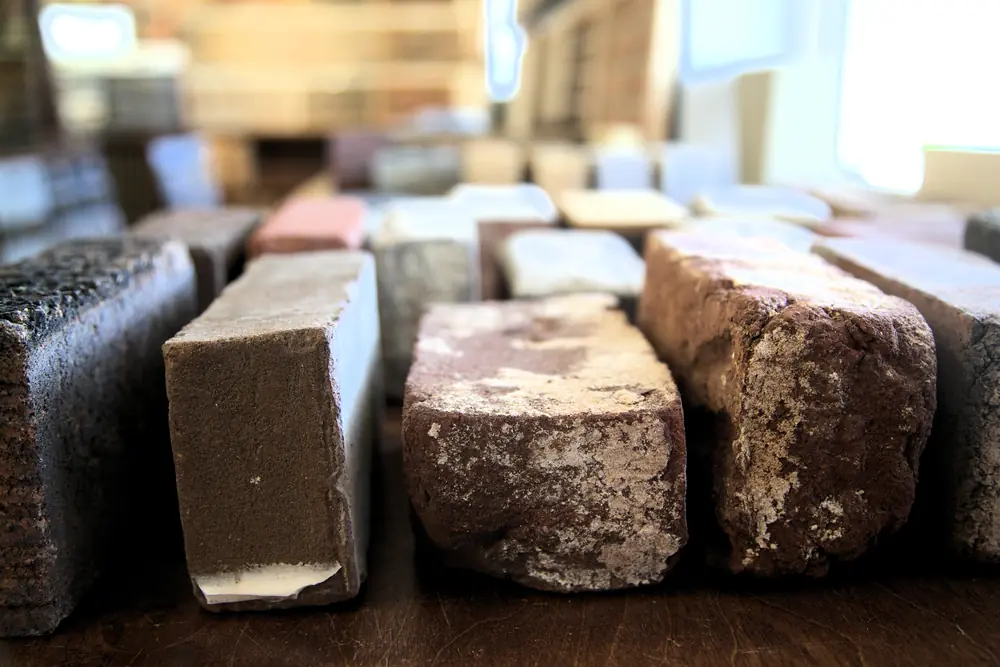
Thin brick veneer panels and corner pieces are sold at the Mantua yard for pickup or for delivery to the job site, with pricing Quote required. Thin brick sits under the wider thin brick veneer range, and the page on thin brick versus full brick helps decide between the two.
Which thin brick lines and colors are on hand is a question for the yard counter.
Thin Brick Panels and How They Go On
Thin brick panels are modular panel systems: an intermediary panel, usually 4 to 6 square feet in area and made of polystyrene, metal or another material, that supports the thin brick, per Brick Industry Association Technical Notes 28C. Panels are fastened to the wall with the brick already adhered, or the brick is adhered to the panel in the field.
The same note lists four ways thin brick goes on a wall: thick set, thin set, modular panels and prefabricated panels. Panel systems follow the panel manufacturer's instructions, so the panel product chosen decides the method.
Ordering Thin Brick Corners and Flats
Thin brick corners are separate units from flats, and a corner run needs its own count. Measure the flat wall area in square feet and the outside corners in linear feet, then price them as two lines.
Corner units may be formed in their final shape, cut from a single unit or assembled (often mitered, meaning cut at an angle) from several units, per Brick Industry Association Technical Notes 28C. Most thin brick is 1/2 to 1 inch thick, so a corner piece turns the wall edge and keeps the look of a full brick face.
Corner and edge units are usually packed in boxes or strapped in small packages rather than stacked in cubes. Matching thin brick flats and corners to existing brick is a color-match and texture-match job, and the brick matching page covers the in-person comparison.
Installation Accessories
Installation accessories for thin brick are the lath, fasteners, barrier, flashing, mortar or adhesive and jointing tools that sit behind and between the brick. Kelly Supply Co. sells materials and does not install them, and the Brick Industry Association notes that adhered thin brick may be installed by masons, tilesetters or other workers, per Technical Notes 28C. Which accessories the yard has on hand is a counter question.
Lath, Mesh and Fasteners
Lath and mesh are needed only for the thick set method, where reinforcement in the scratch coat (the first mortar layer) helps control shrinkage cracking, per Brick Industry Association Technical Notes 28C. Metal lath is specified at 2.5 lb/sq yd or 3.4 lb/sq yd and woven wire mesh at 18 gauge or heavier, per Brick Industry Association Technical Notes 28C. Corrosion-resistant fasteners should penetrate wood studs by at least 1 inch, per Brick Industry Association Technical Notes 28C.
Mortar and Adhesive Standards
Mortar for thin brick follows ASTM C270 Type S, or a modified mortar that meets ANSI A118.4, or a non-sagging adhesive compatible with the brick and the wall, per Brick Industry Association Technical Notes 28C. A modified-mortar or adhesive bond needs a minimum shear strength of 50 psi between the brick and the substrate, per Brick Industry Association Technical Notes 28C. A thin set bond coat runs about 1/8 inch thick with a notch-trowel (a trowel with grooved edges), per Brick Industry Association Technical Notes 28C. The coverage per bag depends on the product, so the data sheet on the bag sets the quantity.
Barrier and Flashing Materials
Barrier and flashing materials matter on exterior walls over studs, where two layers of water-resistive barrier or one layer with a drainage mat are called for, per Brick Industry Association Technical Notes 28C. Corrosion-resistant flashing or a weep screed belongs at the base, with a vertical leg of at least 3-1/2 inches, per Brick Industry Association Technical Notes 28C.
Wall Surfaces Thin Brick Can Go Over
Wall surfaces should be structurally sound and free of coatings and loose debris, with no more than 1/4 inch of variation from plane in 10 feet, per the same note. Cement backer board is the recommended base for thin set on exterior stud walls. Joint width and tool choice follow the panel or mortar manufacturer's instructions, and jointing tools such as a grout bag or a concave, vee or grapevine jointer are the usual kit.
Manufacturer Warranty, Samples and Pricing
The manufacturer's warranty is the only warranty on thin brick: products carry the manufacturer's own warranty, and Kelly Supply Co. issues no warranty of its own.
Take-home sample boards are available from the Mantua yard, and the sample boards how to choose page explains how to use them at home. Sample boards are free to borrow: take them home and bring them back when you are done.
Thin brick pricing is $0.80-$1.80 per piece, and the price varies by brick choice and color.