

 Member, Building Industry Association of Northeast Ohio
Mortar and Portland Cement at the Mantua Yard
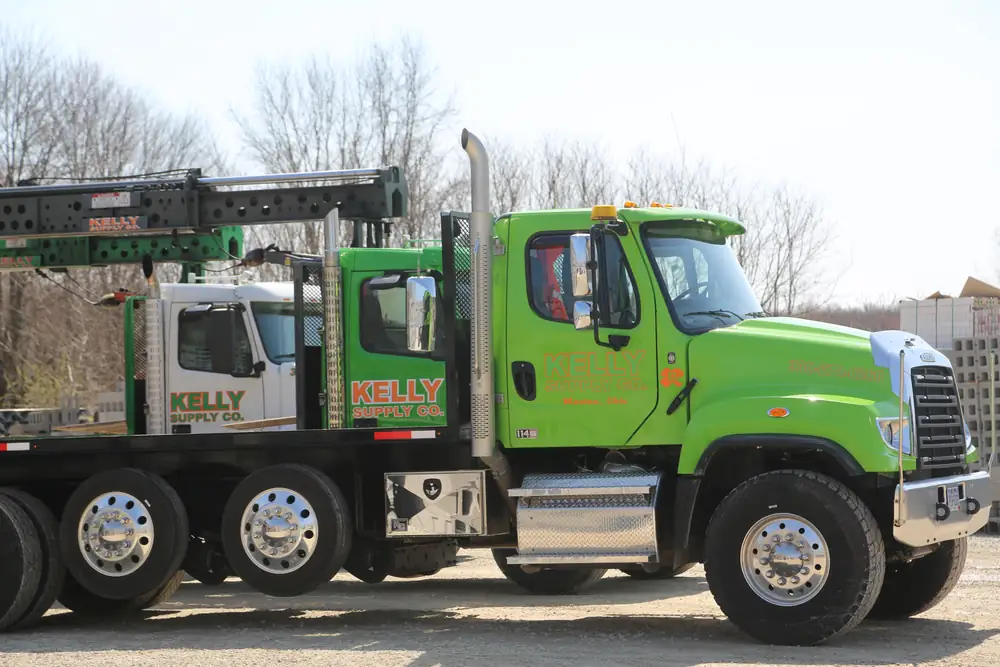
Mortar and Portland cement are sold by the bag at Kelly Supply Co. in Mantua, and they sit in the concrete and masonry products range with block and other masonry basics. Mortar is priced per bag, so call for pricing with the product and the bag count.
Anyone can buy, with no account required. Trade pricing is not necessarily different from retail; typically the bigger the job, the better the price.
Types of Mortar
Types of mortar for unit masonry are defined by ASTM C270, which covers four types: M, S, N and O. The standard offers two ways to specify them, a proportion specification and a property specification, and the proportion specification is the default when a project does not say which one applies, in the Brick Industry Association's Technical Note 8.
Type N mortar suits normal use, including most veneer work, in the same Technical Note 8. Other masonry, such as load-bearing walls or work below grade, can call for a different type, and the plans or the designer name the type to order.
The type decides strength and workability, so the choice should follow the plans rather than habit. Ask the yard counter which products are on hand for the type your project names. Call the yard for the mortar types, colors and specifications in stock.
Mortar and Cement Product Types
Mortar can be made from Portland cement with hydrated lime and sand, from mortar cement with sand, or from masonry cement with sand. Mortar cement and masonry cement are used alone with sand, without added lime, to make Type M, S, N or O mortar, in Technical Note 8.
Mortar cement must reach a minimum flexural bond strength of 115 psi for Type M, 100 psi for Type S and 70 psi for Type N under ASTM C1329, in Technical Note 8. Masonry cement follows ASTM C91, which limits air content to 20% for Type N and 18% for Types S and M, also in Technical Note 8.
Which of the three suits a job depends on the mortar type the plans call for and on the masonry unit. The yard counter can match that to a cement or a premixed bag.
Colored Mortar
Colored mortar can be made three ways: pigments added to the mix in the field, a colored cement, or a colored mortar mix that arrives in a bag, in Technical Note 8. Colored aggregate is preferable to pigment when the aggregate alone can reach the color wanted, because sand and ground stone keep their color and do not weaken the mortar, in the same note.
Pigment should meet ASTM C979 and should be kept to the least that gives the color, with metallic oxide pigment limited to 10% of the cement content by weight and carbon black to 2%, in Technical Note 8. Mortar cement and masonry cement take half those percentages.
Colored mortar should not be retempered, because adding water to a stiffened batch dilutes the color, and smaller batches make that easier to avoid, in Technical Note 8. Mixing water, the moisture in the brick and the tooling and cleaning of the joint also change the final color.
Mortar color is matched by eye against a sample, so a colored mortar chip beside the brick or stone is the way to check it. Call the yard for the mortar types, colors and specifications in stock.
On a repair or addition, the new mortar and the new brick both need matching, and brick matching covers the brick side. Pigment, cement shade and sand all affect how a tuckpointed joint blends with the old ones, so a joint sample from the wall is worth bringing along.
Mixing, Cure and Cold Weather
Mixing mortar to a workable batch and keeping it from drying out before the masonry is laid are the two habits that matter most, because mortar that has stiffened should not be brought back with extra water. For cold work, set accelerators typically reduce setting time by 30 to 40% and are typically used to shorten cold-weather protective measures, in Technical Note 8.
Per-bag yield and curing guidance can differ by product, so the bag label and the manufacturer's data sheet are the sources to use. Call the yard for the mortar types, colors and specifications in stock.
Pickup and Delivery for Mortar
Pickup for mortar and cement is at the Mantua yard, and delivery goes to the job site across Northeast Ohio, quoted by distance and load. Block, mortar and cement for one wall can go on one quote, and concrete block is the related spoke for the block side.