

 Member, Building Industry Association of Northeast Ohio
Gas Fireplace Inserts at the Mantua Yard
Gas fireplace inserts are part of the fireplace inserts range at Kelly Supply Co. in Mantua. The yard sells inserts and does not install them, and a quote is required for pricing, so request a quote with the model you are considering. Call the yard for the current models and their specifications.
Remodelers can order an insert as part of a larger fireplace job, and the yard counter can talk through the fireplace opening, the fuel and the venting before a model is chosen.
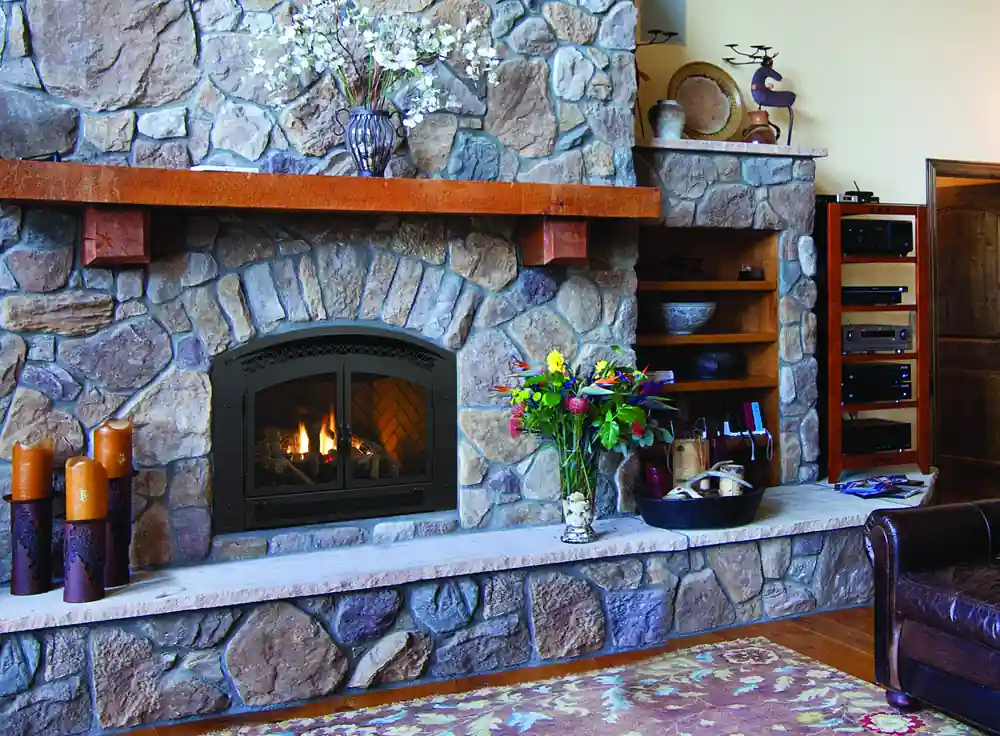
How to Choose a Gas Fireplace Insert
A gas fireplace insert is chosen on a short list of factors, and the order they are settled in matters because venting and fuel can rule models out before style does.
Gas can also suit buyers who want less smoke, because even the cleanest wood heating devices emit significantly more smoke than gas stoves, in EPA's guide to choosing wood-burning appliances.
- Size: the opening the insert must fit and the room it must heat.
- Fuel: natural gas or propane, as the home's supply allows.
- Venting: how the exhaust leaves the house.
- Ignition and controls: how the burner lights and how the flame is adjusted.
- Design: the face, the flame pattern and the trim.
- Price: quote required.
Sizing a Gas Insert
Sizing a gas insert starts with the fireplace opening, because the insert's body has to fit the firebox, and its viewing area, the glass you see the flame through, sets how it looks in the room. The heat output and heated area for each model are on the manufacturer's spec sheet.
The yard counter can read the spec sheet with you against the room, and a model that is sized to the space heats it without cooking it. A gas insert typically zone-heats the room it sits in rather than the whole house, and each model should be clearance-rated for the mantel and trim around the opening. Call the yard for the current models and their specifications.
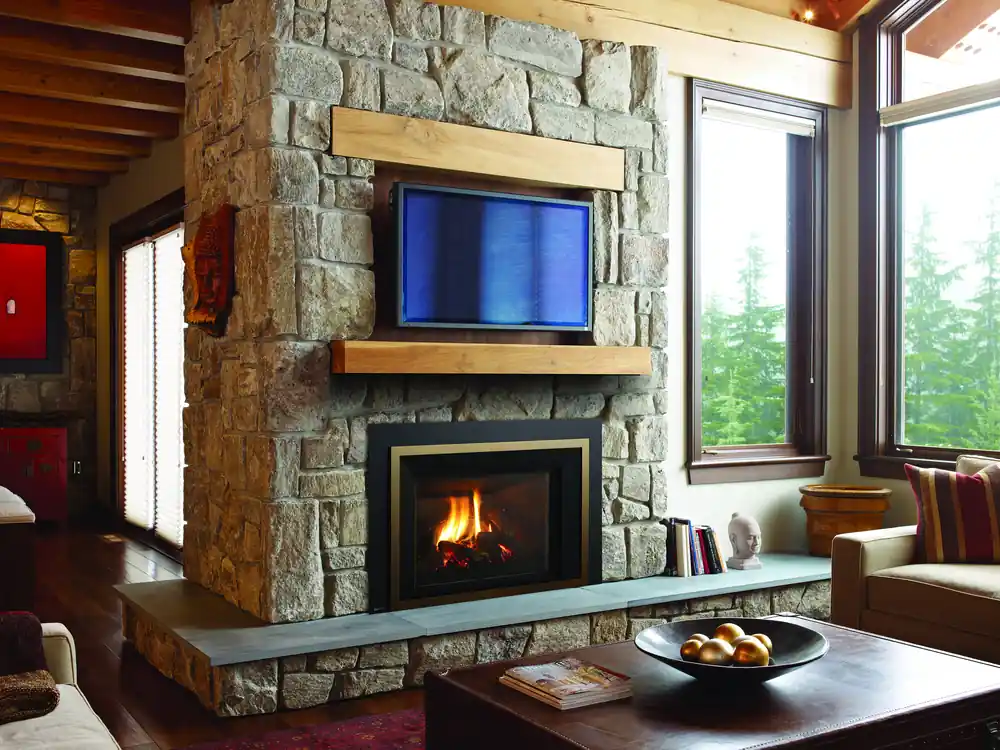
Fuel Options for Gas Inserts
Fuel options for gas inserts are natural gas and propane, and a given model can run on one or on both, depending on the manufacturer's design and any conversion kit. Check the fuel your home has before a model is chosen, because a model built for one fuel can need a conversion kit for the other. Where a manufacturer offers a conversion kit, a model can be fuel-converted from one gas to the other. Call the yard for the current models and their specifications.
Venting Options Explained
Venting options for a gas insert come in three kinds, and the kind decides where the exhaust goes and which fireplaces the insert can retrofit into. Each one fits some homes and not others.
A direct-vent insert can seal the firebox from the room and carry combustion air in and exhaust out through a pipe within a pipe, which lets it run through an existing masonry chimney with a liner or through an outside wall. A B-vent insert can draw combustion air from the room and exhaust up a vertical flue, so it needs a straight run to the roof.
A vent-free insert has no flue and releases its combustion byproducts into the room, so local code can restrict it and the building department should be asked first.
Gas piping and venting for fuel gas appliances fall under NFPA 54, the National Fuel Gas Code, and NFPA 211 covers the design, installation, maintenance and inspection of chimneys and vents. A qualified gas contractor and the local building department set the piping, the liner and the vent for a given house. A contractor can insulate the liner where the chimney needs it.
Ignition and Controls
Ignition and controls differ by model, because some gas inserts ignite with a standing pilot or with electronic ignition that needs household power, and others can light without electricity. Ask which ignition a model uses if the house loses power in winter storms. Controls on some models can automate the flame with a thermostat or a remote. Call the yard for the current models and their specifications.