
 Member, Building Industry Association of Northeast Ohio
Manufactured Stone vs Natural Stone at a Glance
Manufactured stone and natural stone differ most in weight, freeze-thaw testing, upkeep and how a buyer sees each at the yard, and the table below sets the two side by side on those points. Manufactured stone is the product type described by ASTM C1670, a specification for adhered units that are wet-cast from cement and aggregates to imitate natural stone (ASTM C1670/C1670M-24). Natural stone comes out of a quarry and is sawed, cut or split into pieces.
| What a Buyer Weighs | Manufactured Stone | Natural Stone |
|---|---|---|
| Weight per square foot | At or under 15 lb per sq ft saturated for one product line, per a federal Materials Release (HUD Materials Release 910h) | Varies by stone and cut thickness. |
| Thickness | A maximum average thickness of 2.625 in. for that same product line, per HUD Materials Release 910h | Set by how the quarry cuts the stone, from thin veneer to full-thickness pieces |
| Freeze-thaw | A mass loss no greater than 3 percent in the ASTM C1670 freeze-thaw test for that product line, per HUD Materials Release 910h | Depends on the stone's absorption and structure, so ask for test data on the specific stone |
| Compressive strength | At least 1,800 psi per unit and a 2,100 psi average across five samples for that product line, per HUD Materials Release 910h | Listed among the physical properties in ASTM C615 for granite dimension stone, so ask for the value on the exact stone |
| Appearance | Cast in repeating profiles, so color and texture can stay consistent from pallet to pallet | Cut from quarried stone, so color and surface vary within a lot |
| Cost basis at Kelly Supply Co. | $6.00-$10.00 per square foot | Quote required |
| Resale value | Recouped 208% of job cost nationally in the 2025 Cost vs. Value Report (Cost vs. Value 2025 national averages) | No natural stone veneer project appears in that report's 28 national-average projects |
| Returns at the yard | Returns are accepted only for unused standard stock items in their original, resalable packaging. Manufactured stone, natural stone slabs, thin brick and concrete block cannot be returned or exchanged. | Same rule as at left: no returns or exchanges on natural stone slabs |
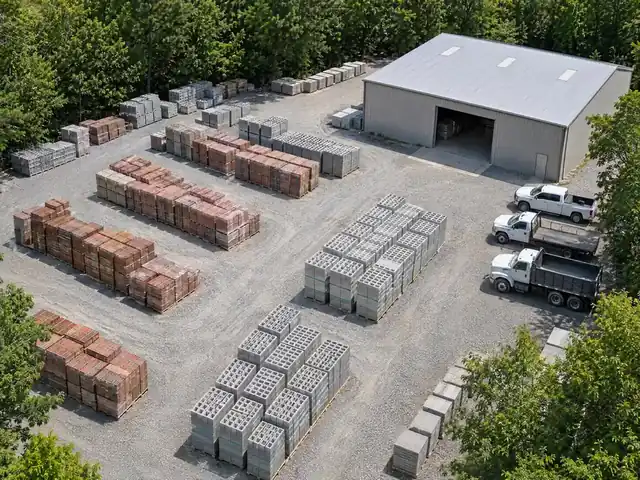
| Stocked at the Mantua yard | Prestige Stone Products, Casa di Sassi, Dutch Quality Stone, ProVia and Paragon Stone | Bluestone and flagstone |
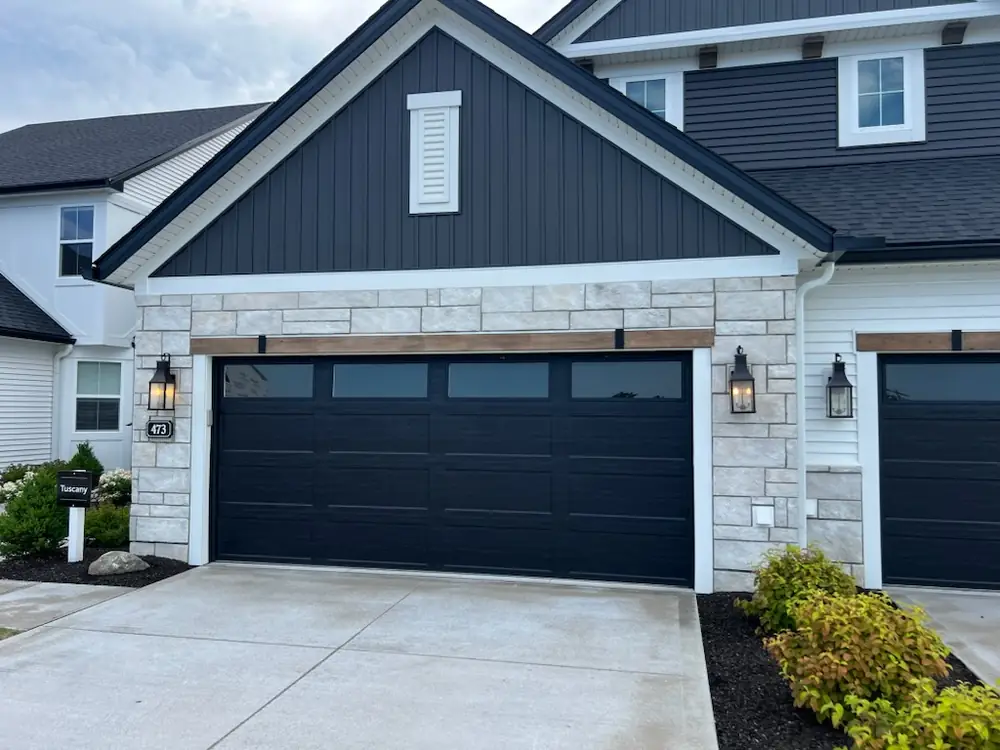
| When it suits | Adhered veneer on a sound wall where lower weight and a repeatable look matter, as on fireplace surrounds and exterior accents | Projects where real quarried texture, varied color or full-thickness pieces matter more than weight |
Weight and Structural Considerations
Weight decides how much load a wall must carry, and a HUD Materials Release for one manufactured stone line puts its saturated unit weight at 15 lb per sq ft or less (HUD Materials Release 910h). A figure like that tells a mason whether a veneer suits the substrate, since an adhered veneer relies on the wall behind it for support. A mason can calculate the veneer weight for the whole wall from the square footage and the unit weight, then verify the result against what the framing or masonry behind it can carry.
Natural stone weight depends on the species and the thickness the quarry cuts. Limestone, for example, falls into low-, medium- and high-density classes under ASTM C568 (ASTM C568/C568M-22), which is why two pieces of the same size can weigh differently. Compare the actual pieces and ask your mason or an engineer whether the wall can carry the load.
Cost and Return on Investment
Cost at Kelly Supply Co. is quoted by the project for both stone types, so the quote request form is the way to compare them on price when you send the wall size and the profiles you like.
On resale, the Cost vs. Value report lists manufactured stone veneer at 208% of job cost recouped nationally for 2025 (Cost vs. Value 2025 national averages). The same report lists no natural stone veneer project among its 28, so it supports no resale comparison between the two types, and a local appraiser or agent is the better guide for a specific house.
Durability in Northeast Ohio Winters
Durability in Northeast Ohio comes down to how a stone handles freezing and thawing, because water that enters a porous face can expand when it freezes. For manufactured stone, the HUD Materials Release cited above notes a freeze-thaw requirement of a mass loss no greater than 3 percent under ASTM C1670 for that product line (HUD Materials Release 910h).
For natural stone, ASTM C615 for granite dimension stone lists absorption by weight and density among its physical properties (ASTM C615/C615M-23), so ask for those values on the exact stone you are considering.
Installation, Upkeep and Environmental Impact
Installation of either type should follow the instructions for the specific product and the local building code, so have the mason who will set the stone read them before you order. Kelly Supply Co. sells the material and does not install it.
Upkeep differs by product, and cleaning or sealing guidance can come from the manufacturer or the stone's supplier. Environmental impact for either type depends on the quarry or plant, the haul distance and the product, and this page publishes no life-cycle figure.
Take-Home Sample Boards
Sample boards let you hold a manufactured piece and a natural piece against the wall, the floor or the trim it will sit beside. Sample boards can be taken home from the Mantua yard, and the buying guide for sample boards covers how to judge them in daylight. Evaluate each finalist in daylight, match it against the trim, and select the stone only after the board has sat against the house. Sample boards are free to borrow: take one home and bring it back when you are done.
Which Option Suits Which Project
Which option suits you depends on the wall, the budget and the look you want, and the situations below show how the two types usually divide.
- If the project is an adhered veneer on a fireplace wall or an exterior accent and lower weight matters, manufactured stone veneer is usually the first type to price.
- If you want real quarried texture, varied color or full-thickness pieces, natural stone is the type to look at first.
- When the wall's capacity is uncertain, a mason or an engineer can recommend which type the wall can carry before you choose.
- For a mixed look, such as natural stone at the base and manufactured stone above, a sample board for each shows how the two meet.