
 Member, Building Industry Association of Northeast Ohio
Brick Pallet Price: What Sets the Total
Brick pallet price is the per-brick price multiplied by the number of brick on the pallet. Kelly Supply Co. prices the brick selection at $0.60-$1.25 per brick for full brick, and face brick is Quote required.
The count on a pallet depends on the brick size, so the same per-brick price gives a different pallet total for a different product, and a quote for the chosen brick shows the exact figure. Pricing is quoted from the Mantua yard for pickup, or for delivery to the job site across Northeast Ohio.
Brick Quantities Reference
Brick quantities depend on brick size, and the table gives modular brick figures from the Brick Industry Association and from one brick manufacturer so that a budget can start from published numbers.
| Quantity | Modular Brick Figure | Where It Comes From |
|---|---|---|
| Brick per 100 sq ft of wall | 675 brick | Table 4 of Brick Industry Association Technical Note 10 (BIA Technical Note 10) |
| Brick per cube | 525 brick in one manufacturer's listing | Dimensions page of a brick manufacturer (Watsontown Brick) |
| Weight per brick | 4.0 to 4.9 lb in that manufacturer's listing | The same manufacturer's dimensions page (Watsontown Brick) |
| Weight of one cube | About 2,100 to 2,570 lb, multiplied from that manufacturer's listing | Calculated from the count and weight per brick in the listing above |
How Many Pallets Do I Need
How many pallets you need comes from the wall area, the brick size and the count per pallet, and a written method keeps each step visible so the quantity can be checked against the brick you pick.
Worked Example for a Modular Brick Wall
For a 250 sq ft wall of modular brick, the Brick Industry Association count of 675 brick per 100 sq ft gives about 1,688 brick (BIA Technical Note 10). Dividing by the 525 brick per cube in one manufacturer's listing gives about 3.2 cubes (Watsontown Brick), which rounds up to 4 before any allowance for waste.
For your own wall, swap in the count per pallet for the brick you choose, because that count changes with the product. Bring the numbers to the yard or call during yard hours, and ask the counter to check them against the brick you picked.
Sample Boards Before a Full Pallet Order
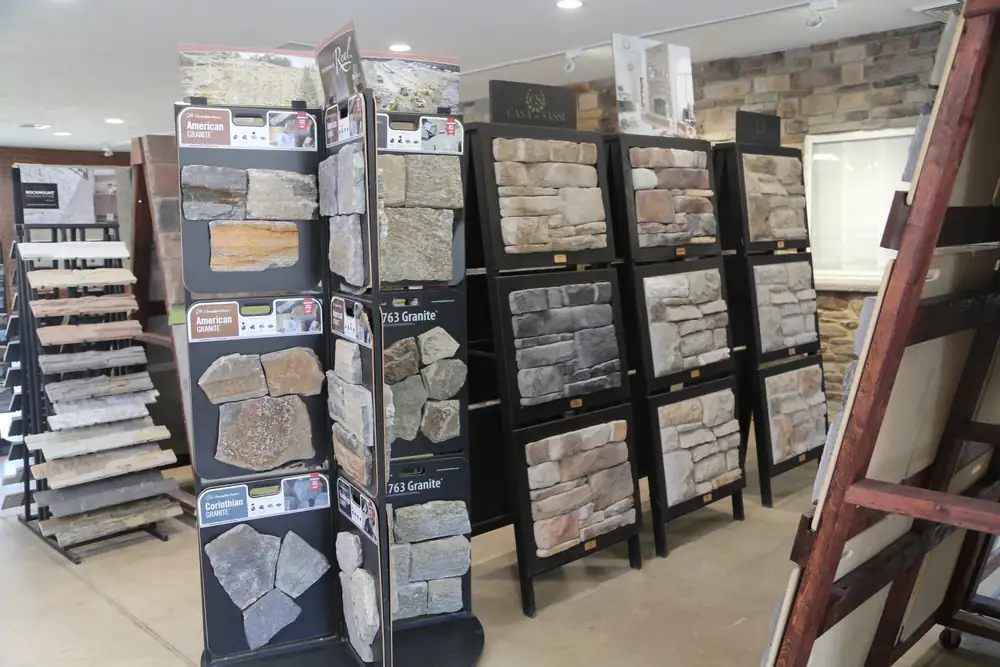
Sample boards let you confirm the look before a full pallet order, and sample boards can be taken home from the Mantua yard. The sample boards guide covers how to judge them. Sample boards are free to borrow: take them home and bring them back when you are done.
- Measure the wall length and height in feet, multiply them to get square feet, and subtract window and door openings.
- Choose the brick size, because the size sets the count per square foot.
- Multiply the square feet by the count per square foot, using the Brick Industry Association figure of 675 modular brick per 100 sq ft of wall (BIA Technical Note 10).
- Add an allowance for bond pattern, breakage and waste, since that technical note advises modifying the estimate for those factors, and ask the yard how much to add for the pattern you plan.
- Divide the total by the count per pallet for the exact brick, then round up to whole pallets.
What Delivery Equipment Handles a Pallet
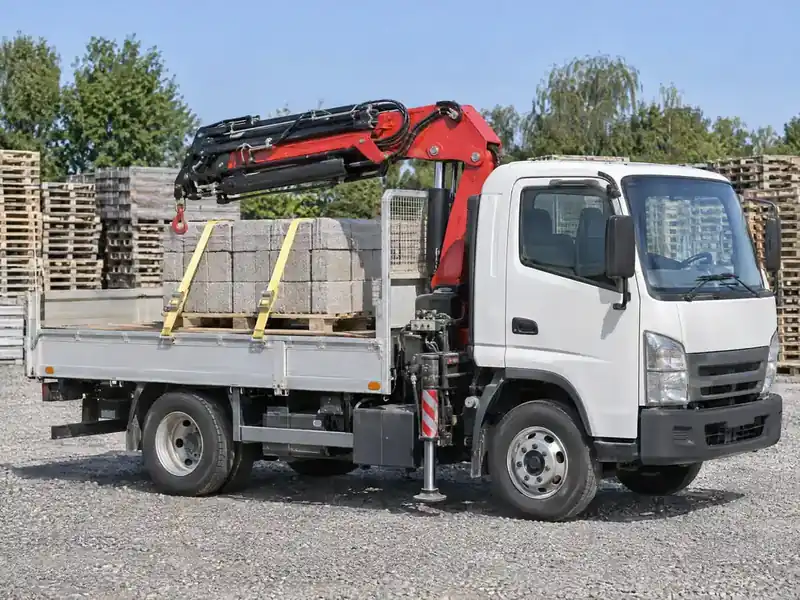
Delivery equipment matters because one cube of modular brick weighs about 2,100 to 2,570 lb at the 4.0 to 4.9 lb per brick listed by one manufacturer (Watsontown Brick). Kelly Supply Co. delivers bulk and palletized material to the job site with boom trucks and a Moffett forklift, and how delivery works explains what each machine does.
What Else Affects Your Total Cost
Total cost also depends on delivery, job size and matching. Delivery is quoted by distance and load, so a pallet picked up at the Mantua yard and a pallet delivered to a job site have different totals.
Job size matters because trade pricing is not necessarily different from retail; typically the bigger the job, the better the price. Contractors can read about contractor pallet pricing for brick, and anyone can buy without an account.
Matching existing brick can change the quantity you need, and brick matching is the place to start when a new wall must blend with an old one.