The Pallet Formula in One Line
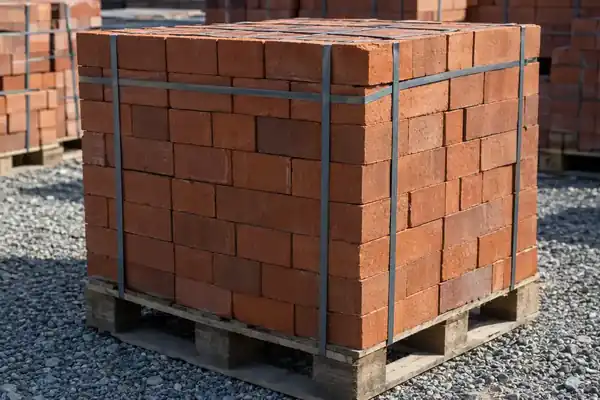
For any pallet-based order, the pallet count is the project area plus overage, divided by the coverage per pallet, rounded up. The guide on how many pallets of brick you need explains the same method for brick, and this post applies it to a patio and a retaining wall.
Coverage per pallet changes with the product, so the number comes from the cut sheet for the stone, paver or block you chose rather than from a rule of thumb.
Measuring a Patio
For a patio, multiply length by width. A 12-by-15-foot patio gives 12 times 15 in the table below, and an irregular patio can be split into rectangles that are measured one at a time and added together.
In the measurement, include the border or edge row if it uses the same material, and leave out any area that will be planted or filled with another surface.
Measuring a Retaining Wall
For a retaining wall, multiply the length of the wall by its height to get the face area. A 20-foot-long, 3-foot-tall wall gives 20 times 3 in the table below.
In a wall, the courses that sit below grade can still be part of the order, so check the block manufacturer's installation guide for how the base is built. Caps, corners and steps are counted separately from the field blocks.
Coverage per Pallet and Overage
Coverage per pallet is printed on the manufacturer's cut sheet. A Belgard cut sheet for the Mega-Arbel 60mm paver lists 104.4 square feet per pallet, with 6 units per layer and 12 layers per pallet.
That sheet carries Belgard's Utah and Colorado office addresses, so it works here as a worked example rather than as a figure for any Ohio order. Ask for the cut sheet of the product you choose.
Overage covers cuts, breakage and pieces set aside for color variation, and it depends on the pattern and the product.
A Worked Patio and Wall Example
In this example, the patio uses the 104.4 square feet per pallet figure from the cut sheet above, and the wall block coverage stays open until a block is chosen. The area rows are in square feet.
| Step | Patio Example | Retaining Wall Example |
|---|---|---|
| Measure | 12 × 15 | 20 × 3 |
| Area (square feet) | 180 | 60 |
| Coverage per pallet | 104.4 on the Belgard cut sheet above | From the block cut sheet |
| Pallets before overage | About 1.7 | Area divided by coverage |
| Overage | Added to the area first | Added to the area first |
| Whole pallets to price | 2, unless overage pushes the total higher | Round the result up |
Pallets at the Mantua Yard
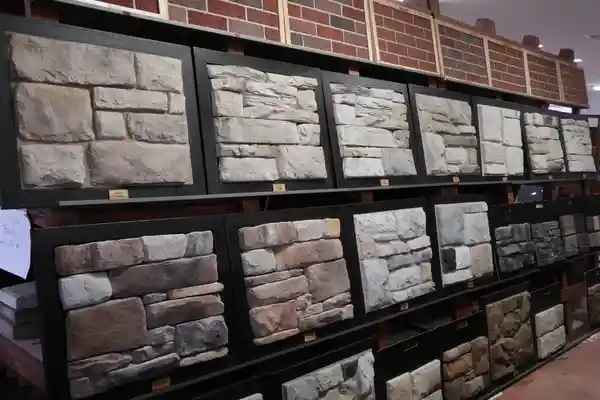
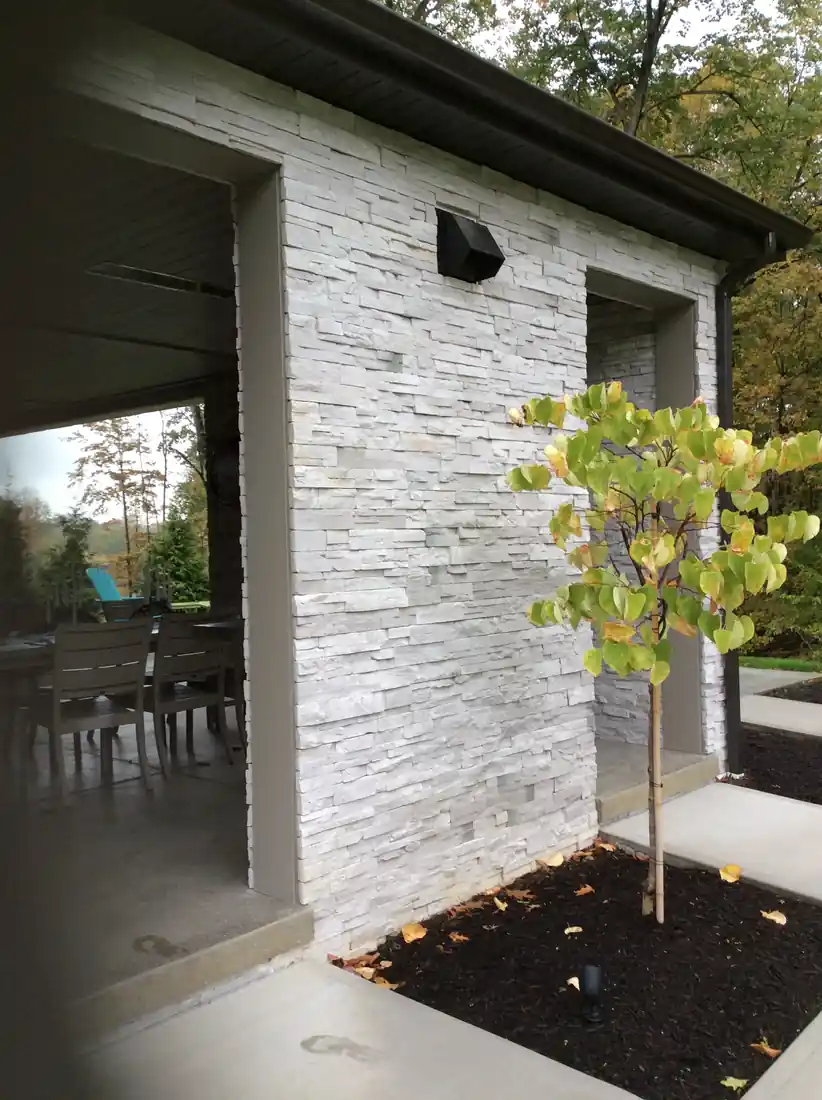
For the order itself, pricing is by quote and covers each product family, including hardscape pavers, wall block, natural stone and manufactured stone. The Mantua yard sells hardscape pavers and wall block, and natural stone and manufactured stone each have their own page.
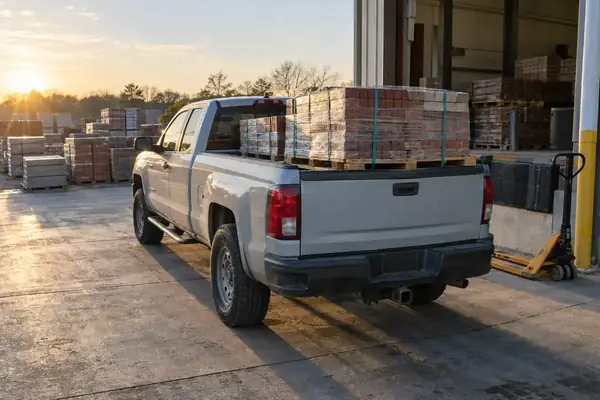
For a pickup or a delivery to the job site across Northeast Ohio, how our delivery works explains the boom truck and Moffett forklift that move pallets. Request a quote with your measurements and the product you are considering.